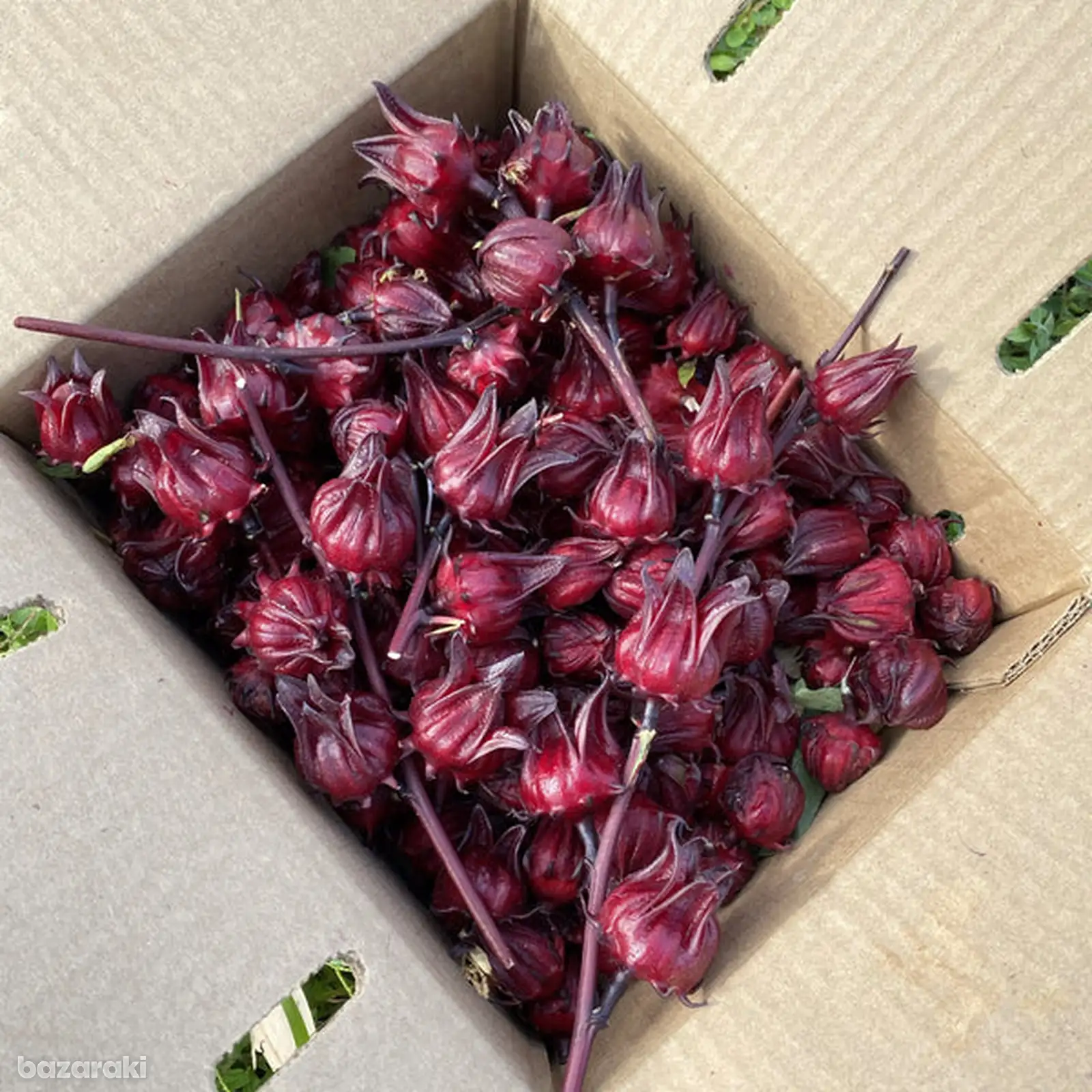
Roselle tropical fruit seeds asian sour leaf jamaican sorrel florida cranberry
1 month ago
289
1 / 12
Condition:
New
Description
Translate to:
Rare To Find Roselle Hibiscus (Hibiscus sabdariffa) Asian Sour Leaf Jamaican Sorrel Florida Cranberry, Rare Luoshen Flower Tropical Fruit Cranberry Taste, for Tea
DESCRIPTION
Please note that the listing is for 6 seeds.
This shrub is native to Africa is aka Florida's cranberry because the calyx, which surrounds the fruit. tastes like cranberries and can be used instead of cranberries in a number of ways--both raw and cooked.
Origin: Roselle is a species of Hibiscus native to Africa, most likely West Africa. It was in the 16th and early 17th century that it spread to the West Indies and Asia, respectively.
Flavor Profile: The flower matures into a bright red cup-like structure contains called a calyx. The color and tart taste of the calyces makes them a good replacement for cranberries.
How To Eat: They are ready to eat as soon as you receive them! Use or preserve them right away. Use it in smoothies, teas and jams. Remove calyces from seed pod, and use fresh or frozen in smoothies. You can dry them and use them as tea by removing the seed pod in the middle and laying the rest of the calyx in a flat dry place or dehydrator
Fun Fact: Roselle is high in antioxidants and anti-inflammatory properties which makes it useful for:
Menstrual Pain Relief
Aids Digestion
Weight Loss
Blood Pressure Management.
Roselle or Sour Leaf is grown in tropical and subtropical regions. Burmese say "chin baung ywat" which is translated into "sour leaf." It can be grown as a summer crop in temperate regions. The flavor of the flowers buds/leaves are sour tasting and work well with pickling, curries, or prepared with strong and spicy flavors.
Hibiscus-Roselle is an Old World plant, used for teas, beverages, jellies, and more. Once a common home garden crop referred to as Roselle. Leaves, seeds, fruits, and roots are edible and can be used medicinally, store frozen, or dried. The leaves can be used cooked or raw, all parts have a sorrel/rhubarb like flavor. The calyx is the most widely used part of the plant. Its cup-like structure is used for flavoring and imparts a natural cranberry-colored dye, harvest before they turn brown. Separate the seeds from the calyx, roast, and brew them for a coffee substitute. As a tropical plant, Hibiscus-Roselle needs full sun, well-drained fertile soil, and ample water. Grows 4-6 feet.
Details:
• Other Name(s): Florida Cranberry, Indian Sorrel, Jamaican Tea, Maple-Leaf Hibiscus, October Hibiscus, Red Sorrell, Chin Baung, Roselle.
• Botanical Name: Hibiscus sabdariffa
• Leaf Flavor: Sour
• Soil Preference: Fertile, Sandy Loam Soil
• Light Preference: Full Sun
• Temperature Preference: 70-90°F
• Days to Germination: 7-14 Days at soil temperatures 75°-85°F
• Days to Maturity: 70-90 Days
• Sow Method: Direct Sow, Transplant
• Planting Time: Spring/Summer after last frost in a warm, sunny location
• Seed Depth: 2-3 seeds 1/2" deep
• Plant Spacing: Approx. 36" apart
• Plant Size: Small Tree.
Cultivation: Roselle is very sensitive to frost. Prepare fertile sandy loam soil. Sow seeds in spring/summer after last frost in a warm, sunny location. Or start seeds indoors and transplant when weather warms. Keep soil moist. For leaf harvesting, begin 6 weeks after transplanting or when 18" tall, leaving 3-4" of stem. Second cutting and after are done in 4 weeks intervals. Short plants may be thinned out. The fruits are harvested when plants are full grown and can easily snapped off by hand. They are easier to break off in the morning than at the end of the day.
- This is a rare plant to find - Please note that the listing is for 6 seeds.