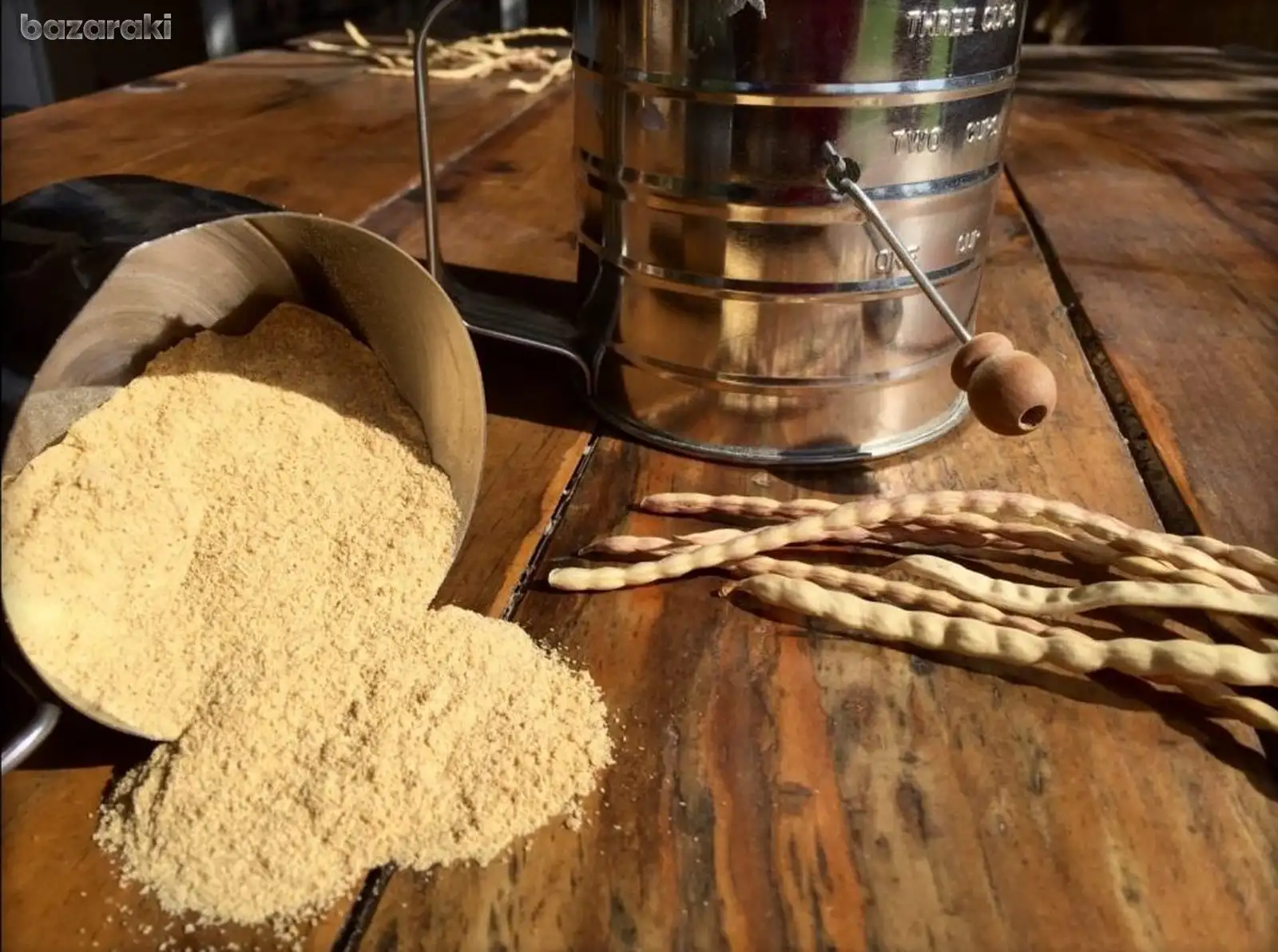
Rare velvet mesquite prosopis velutina desert fruit tree mesquite flour cookies
1 week ago
126
1 / 7
Condition:
New
Description
Translate to:
Rare To Find Velvet Mesquite - Prosopis velutina, Desert Fruit Tree, Mesquite Flour for Cookies, Bread, etc
* Mesquite flour is produced from grinding its seeds pods to produce Flour.
* Mesquite flour has a rich, caramel and nutty flavor and can be used in baking or as a seasoning. It is high in soluble fiber and has more protein than most grain flours. Mesquite Flour is also a good source of minerals including magnesium, calcium, zinc, iron and potassium. It is low in carbohydrates and is naturally gluten free. Although mesquite has a subtle sweetness, its natural sugar comes in the form of fructose, which does not require insulin for it to be metabolized. It has been reported to be effective in balancing blood sugar. Thus, it can be an important addition to low-glycemic or diabetic diets, since it can help maintain steady blood sugar levels that are disrupted by processed flours. When you first begin using mesquite flour, for every cup of flour needed, use ¼ cup mesquite and ¾ cup of any desired flour. This is a general guideline to use as you adjust to its rich flavor. It is also a great addition to smoothies and any amount can be used according to the flavor or nutrients you want to obtain.
**The plants available are the ones in the last photo.
A handsome southwestern native, Prosopis velutina (Velvet Mesquite) is a deciduous, multi-stemmed shrub or small tree, with a spreading crown and crooked branches adorned with feathery, velvety, dark green leaves, up to 5 in. long (12 cm). Twice compound, the leaves have 12-20 pairs of short, hairy, and closely spaced leaflets. The twigs are armed with stout, yellow thorns, up to 1 in. long (2.5 cm), generally occurring in pairs. In spring and summer, a profusion of cream-colored flowers with long, white stamens appear in dense, spike-like racemes. Velvet Mesquite provides an excellent source of nectar for honey bees and is one of the most valuable honey plants in Arizona. The flowers are followed by long, slender, mottled, brown pods, 8 in. long (20 cm), that ripen in late summer. They contain about 25 percent sugar and are valuable livestock food. Southwestern Native Americans prepared meals and cakes from the sweet pods, and livestock browsed them, disseminating the seeds. The bark on older branches and the trunk is dark brown, rough, and thick, shredding in long, narrow strips, while the bark on the young stem is green,helping in photosynthesis. Highly tolerant of heat, this desert shrub or small desert tree is adapted to dry climates thanks to its deep taproot that can reach underground water. An essential plant for the desert wildlife garden, its gnarled, sculptural trunk and wispy, bright green foliage make it a picturesque lawn tree, where it provides a fresh look and creates filtered shade under which almost anything would grow.
*Grows up to 20-30 ft. tall and wide (6-9 m). *Adds about 24 in. per year (60 cm).
*A full sun lover, this plant is easily grown in well-drained soils. Needs little to no supplemental water once established in desert landscape gardens. Drought-tolerant once established. Drought-Tolerant Trees: Top picks for Low-Water Landscapes
*Virtually pest and disease-free.
*Native to the southwestern United States and Mexico.
The Velvet Mesquite Tree (Prosopis velutina) is a native desert tree found primarily in the southwestern United States and northern Mexico, prized for its resilience, ecological value, and distinctive appearance. This deciduous tree typically grows with a spreading canopy that provides much-needed shade in landscapes. Its name comes from the soft, velvety texture of its young twigs and leaflets, which are finely divided and feathery in appearance. In late spring to early summer, the tree produces fragrant, creamy-yellow flower spikes that attract pollinators like bees and butterflies. These are followed by long, edible seed pods that have historically served as a food source for both wildlife and Indigenous peoples.
Velvet Mesquite is exceptionally drought-tolerant, making it an ideal choice for xeriscaping and sustainable desert landscaping. Its deep taproot allows it to access underground water, and it enriches the soil through nitrogen fixation, benefiting surrounding plants. Though slow-growing at first, it becomes a hardy, long-lived tree that requires minimal maintenance once established. Its twisting trunk and gnarled limbs lend it a sculptural quality that adds character to gardens, parks, and naturalized areas. Because of its low water needs, habitat value, and striking form, the Velvet Mesquite is a favorite among native plant enthusiasts and desert gardeners alike.
Stop into any of our locations and allow one of our expertly trained nursery professionals to help you with your landscape design and show you how to incorporate beautiful plants like these into your yard.